La Falta De Vitamina D Da Cansancio

La Falta De Vitamina D Da Cansancio

Déficit de vitamina D: qué le pasa a tu cuerpo cuando no obtiene los niveles adecuados y cómo tratarlo

Mujer con dolor de hombro.

  • La vitamina D es un elemento fundamental del cuerpo presente en diversas funciones del organismo. Resulta clave en la absorción del calcio, por lo que ayuda a mantener la salud de los huesos.
  • Esta se almacena en el tejido graso y puede ser absorbida a través del sol o de la dieta.
  • Aunque la mayoría de personas que tienen bajos niveles no presentan síntomas, un déficit acusado de vitamina D puede conllevar problemas óseos incluyendo el raquitismo en menores.
  • La carencia de vitamina D también ha sido asociada con dolores y debilidad muscular, mayor capacidad para enfermar de resfriados o gripes o cansancio y fatiga continuada.
  • Para tratarlo puedes optar por incluir en tu dieta alimentos ricos en este compuesto, favorecer la exposición solar, o tomar suplementos, aunque esto debe ser bajo prescripción médica.
  • Descubre más historias en Business Insider España.

La vitamina D es un elemento fundamental en el organismo. Una de sus funciones más importantes es ayudar al cuerpo a absorber el calcio, favoreciendo la formación y salud de los huesos, aunque también tiene relevancia en los sistemas inmunitario, muscular y nervioso.

Esta vitamina es liposolible, lo que significa que se almacena en tu tejido graso. Puedes obtener vitamina D a través de tu dieta, comiendo alimentos ricos en ella, como pescados grasos o lácteos enriquecidos, entre otros. También puedes generarla en tu cuerpo a través del sol —aunque siempre con una exposición controlada por los riesgos sobre tu piel que puede ocasionar.

Los niveles recomendados de vitamina D, según los los expertos, son 800 UI diarias para la mayoría de los adultos y 400 UI diarias en niños pequeños desde los primeros días de vida.

Qué puede causar un déficit de vitamina D

Aunque existen dos vías de obtención de este compuesto, lo cierto es que aún con ello, existe el riesgo de no contar con los niveles necesarios que necesita el organismo.

Esto sucede cuandono se ingieren suficientes alimentos ricos en vitamina D y hay una baja exposición al sol, por lo cual no se puede ayudar a compensar la diferencia.

Asimismo existen algunos factores que pueden hacer que se dé un mayor riesgo de tener déficit de vitamina D.

Leer más: Elevados niveles de vitamina D en sangre podrían tener un efecto preventivo en el cáncer de mama

Como indica el Hospital Gregorio Marañón de Madrid desde su página web, enfermedades del intestino como la enfermedad Celíaca, la enfermedad de Crohn, la fibrosis quística y cirugías como el by-pass gástrico pueden impedir que la vitamina D se absorba de forma normal en el cuerpo.

También enfermedades crónicas del hígado o el riñón pueden desencadenar una deficiencia al no ser procesada de manera adecuada.

Síntomas y consecuencias de una deficiencia de vitamina D

Es complicado saber si se tiene una carencia de este complejo, ya que la mayoría de personas que padecen un déficit de vitamina D no muestran síntomas. La forma habitual de conocer los niveles y diagnosticarlo es a través de un análisis de sangre si se cree que existe riesgo de ello.

Cuando el cuerpo no dispone de las cantidades necesarias de este elemento pueden darse problemas en diversas funciones del cuerpo, principalmente en lo relativo a la salud ósea.

Ya que ayuda a absorber el calcio, su carencia puede generar huesos débiles que a su vez deriven en fracturas frecuentes, dolores o incluso deformidades. También se ha señalado una posible relación entre bajos niveles de vitamina D y dolores o debilidad muscular.

Leer más: 6 alimentos que te ayudarán a mejorar la salud de tus huesos

En los casos más extremos y graves puede generar raquitismo en niños y osteomalacea en adultos, es decir un reblandecimiento marcado de los huesos.

La vitamina D parece favorecer el buen funcionamiento del sistema inmunitario, por lo que una carencia de esta podría conllevar una mayor duración de resfriados y gripes si se enferma.

Si bien la fatiga y el cansancio continuado pueden tener su origen en muy diversos motivos, estos síntomas también han sido vinculados con una deficiencia de este elemento.

Como tratar un déficit de vitamina D

Tomar el sol en pareja.

Como remarca el Hospital Gregorio Marañón en su página, para la mayoría de los adultos, la deficiencia de vitamina D "no es una preocupación".

Aún así, si quieres asegurarte de que estás proporcionando a tu cuerpo los niveles que necesita, opta por incluir en tu dieta de manera frecuente alimentos ricos en vitamina D.

Los pescados azules como el atún, las sardinas o el salmónson una de lasfuentes principales. También se encuentra en las setas, la carne de hígado, el huevo o en lácteos enteros o enriquecidos.

Puedes probar además aaumentar tu exposición al sol, siempre que sea con cuidado, para evitar riesgo de quemaduras, que puedan derivar en cáncer de piel.

Aunque sí existe un déficit notorio de vitamina D el tratamiento para ello se realizará a través de fármacos recomendados por un médico, a través de suplementos.

Otros artículos interesantes:

Nutricionistas alertan sobre el peligro de comer sandías y melones ya cortados

Con este sencillo truco reducirás las calorías del arroz a la mitad

Cómo hacer un bronceador casero para ponerte morena tomando el sol

Te recomendamos

Y además

La Falta De Vitamina D Da Cansancio

Source: https://www.businessinsider.es/deficit-vitamina-d-causas-sintomas-tratamiento-671181

Iron Vitamin D Supplements

Iron Vitamin D Supplements

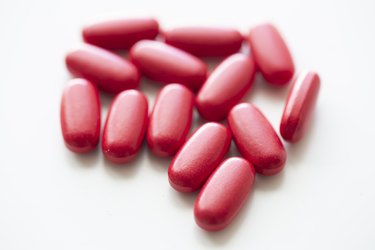
Red Iron Pills

Taking iron pills won't cause vitamin D deficiency.

Image Credit: Jennifer A Smith/Moment/GettyImages

As a trace mineral, iron is a nutrient you need in small amounts. This essential substance is a component of enzymes and proteins. Iron also controls cell development and makes it possible for red blood cells to transport oxygen to every area of your body.

Tip

While taking iron pills won't cause Vitamin D deficiency, the opposite can occur. In some cases, too much Vitamin D can impair your body'a ability to absorb iron.

Vitamin D benefits include facilitation of calcium absorption to form strong bones and it supports your immune system, according to Harvard Health Publishing. There is no reported issue with vitamin D and iron supplements, according to the National Institutes of Health. That said, you should talk to your doctor about any dietary supplements you take, including vitamin D and iron supplements.

Understand the Interaction

Although iron pills do not deplete your supply of vitamin D, the opposite may occur. According to a December 2018 articles published by Nutrients, excessive vitamin D or its lengthy supplementation can impair iron absorption.

If you must take both the mineral and the vitamin for an extended period, discuss with your doctor what the best course of action is. She may need to order blood tests regularly to monitor you for signs of anemia.

According to the Mayo Clinic, mild anemia might not cause any symptoms. But, as anemia worsens, it can cause the following signs and symptoms:

  • headaches
  • difficulty breathing
  • chest pain
  • dizziness/lightheadedness
  • weakness/fatigue
  • irregular heartbeat
  • pale skin
  • cold feet and hands

However, you may be able to avoid interactions between iron and vitamin D if you can get the recommended daily intake for these nutrients from natural sources.

According to Harvard Health Publishing, iron is present in red meats, poultry, legumes and greens. Vitamin D is available from fatty fish, such as salmon and sardines, and fortified milk or margarine.

But the simplest way to get the nutrient is by exposing your skin to the sun which triggers the body to synthesize vitamin D.

The Linus Pauling Institute recommends daily iron intakes based on age and gender. At 19 years of age, a man's requirement is 8 milligrams while a woman needs 18 milligrams of iron. Her recommended intake drops to 8 milligrams when she turns 51.

Do not exceed these daily values without your doctor's recommendation and supervision as too much iron can be fatal. Ask a physician before giving iron supplements to a child or adolescent, to ensure they receive a safe dose.

According to the Linus Pauling Institute, adults up to 70 years of age should consume 600 international units daily. At 71 years of age or older, adults need to take in 800 IU of vitamin D daily. Do not exceed these values unless your doctor recommends higher intakes.

Excessive vitamin D can cause bone loss and kidney stones. Since the nutrient facilitates calcium absorption, too much vitamin D also increases the levels of calcium in your body. The mineral surplus can crystallize and harden your heart.

Iron Vitamin D Supplements

Source: https://www.livestrong.com/article/517433-is-there-any-correlation-between-taking-iron-pills-vitamin-d-deficiency/

How Much Vitamin D To Take In Winter

How Much Vitamin D To Take In Winter

Vitamin D is essential for good health, and cholesterol plays a role in producing vitamin D from sunlight. Most of us don't get enough vitamin D but it's possible to get more from supplements and sunlight.

Why we need vitamin D

Vitamin D helps you absorb calcium and phosphorus from your diet and use these minerals to keep your bones, teeth and muscles strong. This helps prevent falls as you get older.

Vitamin D may have other roles in the body's immune system and heart health too.
A lack of vitamin D can cause bone problems such as rickets (which causes bowed legs) in children and muscle weakness and painful or tender bones in adults.

How we make vitamin D

We get a little vitamin D from food, but we get most of it from sunlight. The sun acts on chemicals under the skin and helps turn them into vitamin D. In winter in the UK, we don't get enough of the right type of sunlight to make enough vitamin D.

Not getting enough vitamin D

We don't need vitamin D from food or sunlight every day. But if you don't get enough over a longer period of time, you won't have enough vitamin D for good health – known as vitamin D deficiency. This is very common in the UK – around one in five adults and one in six children don't have enough vitamin D.

Some people are more likely to have a vitamin D deficiency than others. Supplements and eating foods which contain vitamin D can help.

Vitamin D and cholesterol

Vitamin D is linked to cholesterol because we need cholesterol in our skins cells to make vitamin D from sunlight. The vitamin D is later transformed again in the liver and kidneys, but cholesterol is needed for the first step.

Vitamin D and statins

There has been some debate around whether statins could stop us making enough vitamin D – because statins lower cholesterol. In reality, we have more than enough cholesterol to make vitamin D, even if you take statins. It's more important to make sure you're getting enough time in sunlight or getting enough vitamin D from foods or supplements.

Muscle problems that are thought to be caused by statins

It's possible that muscle aches and pains that are often thought to be caused by statins are actually caused by a lack of vitamin D. Too little vitamin D can cause muscle weakness and tenderness in the bones – these muscle problems seem very similar to the ones linked to statins.

Because a lack of vitamin D is so common, it's likely that many people who are taking statins don't have enough vitamin D.

Your doctor can check if you have enough vitamin D in your blood using a simple blood test.

How much vitamin D is enough?

Adults and children over the age of one need 10mcg (micrograms) of vitamin D per day. This is the same for everyone, including people at risk of vitamin D deficiency and women who are pregnant or breastfeeding.

Babies up to one year old need 8.5-10mcg of vitamin D per day. Find out more about how you can reach this from the NHS.

How to get enough vitamin D

Getting vitamin D from sunlight

To make vitamin D, you need sunlight on your skin. From April until the end of September it's possible to get enough vitamin D by spending time outside.

For most people, you only need to be outside for short periods of time, for example around 20-30 minutes. Although the exact time isn't known because it's different for different people. If you have dark skin, for example if you're of south Asian, African or African Caribbean origin, you will need longer in the sun.

You need to have some skin exposed, for example, your forearms, hands and lower legs. But you can still make vitamin D even if you sit in the shade.

Sitting inside by a sunny window doesn't count because glass filters out the UVB rays – the type of light that is needed to make vitamin D.

In the UK, we don't get enough vitamin D from sunlight between October and March, because the light doesn't contain enough UVB rays. During this time, we need to rely on getting enough vitamin D from food, and possibly supplements.

The guidelines in the UK are that everyone should consider taking a vitamin D supplement in the winter, especially if you're more like to have a deficiency.

Protecting your skin

Suntan lotions protect your skin from the sun but they also prevent your skin from making vitamin D.

If you are going to sit in strong sunlight for some time, or if your skin is sensitive, then you will need to protect your skin so it doesn't burn. Wear sunscreen and a hat in summer if you're out for a long time and avoid mid-day sun on hot summer days. Find out more about your skin type and avoiding sunburn from Cancer Research UK.

Getting vitamin D from food

Most foods don't contain much vitamin D so it's hard to get enough vitamin D from food alone.

Foods which contain vitamin D include:

  • oily fish – such as salmon, sardines, mackerel, trout
  • red meat
  • liver and fish liver oil
  • egg (yolks)
  • foods with vitamin D added – such as most fat spreads, some breakfast cereals and some plant-based alternatives to milk. Check the labels.
  • infant formula – which has vitamin D added to make sure babies get enough.

As most of these foods are animal products, it's harder to get vitamin D from food if you are vegan or vegetarian. Plant-based sources of vitamin D include sun-exposed mushrooms and fortified foods such as vegetable spreads, breakfast cereals and plant based dairy alternatives.

In the UK, cows' milk is generally not a good source of vitamin D because it isn't fortified, as it is in some other countries. There are some yoghurts which have been fortified, but check the label as they can also be high in saturated fat and so should be avoided.

People most at risk of vitamin D deficiency

Some people don't have enough vitamin D. This could be because their skin isn't exposed to enough sunlight, or because of health problems or higher needs for vitamin D.

For example, if:

  • you don't go outdoors often, for example if you are housebound, in hospital or are disabled and less able to get about
  • you wear clothes which cover most of your skin when you go outside
  • you have dark skin, for example if you're from an African, African-Caribbean or south Asian background – as you need more sunlight to make enough vitamin D
  • you wear sunscreen most or all of the time
  • you need more vitamin D, babies, young children and pregnant and breastfeeding women need more vitamin D
  • you are an older adult, as older people can't make as much vitamin D
  • you have a health problem or you're taking certain medications which change the way vitamin D is controlled in the body, such as Crohn's disease, coeliac disease, and some types of liver and kidney disease.
  • you are very overweight, a there is some evidence to suggest that people who are very over weight are more likely to lack vitamin D
  • you eat very few foods that contain vitamin D.

Taking supplements

Any one at risk of not getting enough vitamin D should take a vitamin D supplement – especially during the winter months but ideally all year round.

Adults and older children will need a daily supplement which contains 10mcg of vitamin D. This will sometimes be written as 400IU (international units).

There are special vitamin drops available for babies and children under 5. These may be available free of charge for some families. If you are pregnant and breastfeeding you may also be able to claim free vitamin D tablets.

If you are not in one of the groups above and you simply want to make sure you're taking enough, you can consider taking a vitamin D supplement during the winter, when the levels of vitamin D in our blood usually drops.

You can't get too much vitamin D from sunlight, but it is possible to take too much vitamin D if you take a supplement that has a high dose, and you take it for a long time. This can cause a build-up of calcium in the body, which can damage your bones, heart and kidneys.

So, if you are taking supplements, then 10mcg each day should be enough. More is not necessarily better. Don't go over 25mcg a day for adults unless your doctor advises you to. If in doubt, check the advice about the dose on the pack or speak to your doctor about what's right for you.

Find out more about vitamin D and how to get enough, including the guidelines for pregnant women and babies, from the NHS.

Learn about dark chocolate and cholesterol

How Much Vitamin D To Take In Winter

Source: https://www.heartuk.org.uk/low-cholesterol-foods/vitamin-d

How Many Iu In 50 Mcg Vitamin D

How Many Iu In 50 Mcg Vitamin D

Photo Courtesy: Justin Paget/DigitalVision/Getty Images

Vitamin D is important for maintaining a healthy body, primarily because it helps you fully maximize your body's absorption and utilization of calcium, an important mineral that we all need. When paired with calcium, vitamin D helps regulate bone remodeling and growth, ensuring healthy, strong bones. Vitamin D can also help protect older adults from osteoporosis, which occurs due to excess bone loss from aging.

Furthermore, this nutrient boosts your immune system and reduces inflammation within your body, potentially warding off future medical conditions in the process. It also plays a vital role in cell growth, neuromuscular functions and protein encoding. Studies have shown that a regular, healthy vitamin D intake can also serve as an antidepressant and make people feel generally happier. But that's not all you'll want to know about vitamin D.

Vitamin D is naturally found in certain foods and now appears in many more foods that have been fortified with added nutrients. The best sources of naturally occurring vitamin D are oily fish such as salmon, tuna, cod, sardines and mackerel. Fish liver oils are another good source of vitamin D. Small amounts of the nutrient are present in beef liver, cheese, egg yolks and mushrooms.

Photo Courtesy: Alexander Spatari/Moment/Getty Images

Commonly, vitamin D-fortified foods include whole milk, orange juice, margarine and breakfast cereals. It's important to look at the label and nutrition facts to verify that vitamin D is in a particular food you're considering. Because dairy products are often fortified with vitamin D, lactose intolerant or vegan individuals should keep an eye on their diets to ensure they get enough of the vitamin.

Sun exposure is another method of naturally obtaining vitamin D, as our bodies can create their own vitamin D upon exposure to ultraviolet (UV) rays from the sun. However, it's difficult to gauge exactly how much sun exposure can generate sufficient vitamin D, as overexposure can be harmful, too. UV rays are also known to trigger free radicals, which can lead to skin cancer if left unchecked.

It's been suggested that getting approximately 15 minutes of sun exposure between 10 a.m. and 3 p.m. at least twice a week to your face, arms, legs or back will help your body synthesize enough vitamin D. It's important to note that you can't cover the exposed area of your body with sunscreen if you choose to get vitamin D naturally. The SPF blocks UV rays and can hinder your body's ability to create vitamin D. If you're in the shade or behind a window, the rays will not get through. If the climate where you live is primarily cloudy, it's important to get your recommended amount of vitamin D via other means.

Dietary supplements are also an excellent way of obtaining vitamin D. Supplements come in two forms: vitamin D3 (cholecalciferol), which is identical to the form your body makes when exposed to sunlight, and vitamin D2 (ergocalciferol), which differs slightly from D3 in its chemical side-chain structure. There's some evidence that vitamin D3 increases and maintains overall levels slightly better than vitamin D2.

Side Effects of a Vitamin D Deficiency

Vitamin D deficiency occurs when you don't adequately absorb the nutrient or when your kidneys can't convert the nutrient to its active form. This deficiency can result in medical conditions, two of which are called rickets and osteomalacia.

Photo Courtesy: RealPeopleGroup/E+/Getty Images

Rickets, a disease characterized by a failure of bone tissues to get enough minerals, can result in abnormal, soft bones and skeletal deformities. It's most common in children. Fortunately, it isn't permanent, and kids can consume as few as 1 to 3 teaspoons of cod liver oil a day to reverse the condition.

With the help of fortified foods today, rickets is almost obsolete in the United States. Osteomalacia, characterized by soft and weak bones, is usually present in adults. It's commonly treated with an intense regimen of vitamin D replacement under the care of a physician.

Vitamin D and Other Health Conditions

Vitamin D deficiency has been linked to cardiovascular disease, and people with lower levels of vitamin D appear to be at an increased risk of having a heart attack or stroke. However, the exact relationship isn't clear, and there appears to be no benefit to cardiovascular risk in taking a vitamin D supplement.

Photo Courtesy: PixelsEffect/E+/Getty Images

Research is also ongoing to find if there's a link between vitamin D and multiple sclerosis (MS). It appears that vitamin D deficiency is linked to the development of MS, and people with MS and higher levels of vitamin D appear to have reduced disease activity.

Low vitamin D has been linked to an increased risk of contracting respiratory illnesses such as influenza A. It appears that people with low vitamin D levels are at greater risk of severe novel coronavirus (COVID-19) infection. It's not clear yet if routine vitamin D supplementation would reduce this risk.

Because vitamin D is a fat-soluble substance, it can stay in your body for several days. Thus, vitamin D poisoning is possible if you supplement too much vitamin D over a period of a few months. Symptoms of vitamin D overdose include dehydration, vomiting, decreased appetite, irritability, constipation and fatigue. If left unaddressed, vitamin D poisoning can lead to anorexia, over-calcification of the bones and internal organs, kidney stones and hypertension (high blood pressure). It's important to note that vitamin D poisoning usually only occurs with excessive intake of dietary supplements. It's highly unlikely to occur as a result of normal dietary intake and sun exposure.

Daily Dosage Recommendations

The recommended dietary allowances for vitamin D vary depending on your age and other health and life circumstances, such as pregnancy. For infants under 12 months, the recommended intake is 400 international units (IU) or 10 micrograms (mcg). For individuals under 70 years old, the recommended intake is 600IU (15mcg). For individuals over 70 years old, the intake increases to 800IU (20mcg).

Photo Courtesy: katleho Seisa/E+/Getty Images

If you have a pre-existing medical condition or other medical concerns, it's best to talk to a healthcare professional about determining your recommended dietary allowance for vitamin D. This way, you can be sure the vitamin doesn't interact negatively with your condition or medication.

Resource Links:

https://medlineplus.gov/vitamind.html

https://ods.od.nih.gov/factsheets/VitaminD-Consumer/

https://www.hsph.harvard.edu/nutritionsource/vitamin-d/

https://medlineplus.gov/druginfo/meds/a620058.html

https://bestpractice.bmj.com/patient-leaflets/en-gb/pdf/3000049/Vitamin%20D%20deficiency.pdf

https://bestpractice.bmj.com/topics/en-gb/641

https://assets.publishing.service.gov.uk/government/uploads/system/uploads/attachment_data/file/537616/SACN_Vitamin_D_and_Health_report.pdf

https://www.covid19treatmentguidelines.nih.gov/adjunctive-therapy/vitamin-d/

MORE FROM SYMPTOMFIND.COM

How Many Iu In 50 Mcg Vitamin D

Source: https://www.symptomfind.com/health/vitamin-d-facts?utm_content=params%3Ao%3D740013%26ad%3DdirN%26qo%3DserpIndex

Having Low Vitamin D Levels

Having Low Vitamin D Levels

  • Definition
    • What Is Vitamin D Deficiency?
  • Symptoms
    • What Are Symptoms of Vitamin D Deficiency?
  • Causes
    • What Causes Vitamin D Deficiency?
  • Diagnosis
    • How Is Vitamin D Deficiency Diagnosed?
  • Treatment
    • What Is the Treatment for Vitamin D Deficiency?
  • Complications
    • What Are Complications of Vitamin D Deficiency?
  • Prevention
    • How Do You Prevent Vitamin D Deficiency?
  • Guide
    • What Happens When Your Vitamin D Is Low? Topic Guide

What Is Vitamin D Deficiency?

Vitamin D deficiency can cause weakness, bone pain, fatigue and even cancer in some cases. Luckily, vitamin D supplements are cheap and common and can cure the condition in many cases.

Vitamin D deficiency can cause weakness, bone pain, fatigue and even cancer in some cases. Luckily, vitamin D supplements are cheap and common and can cure the condition in many cases.

Vitamin D is a fat-soluble vitamin that helps the body absorb dietary calcium and phosphorus from the intestines and suppresses the release of parathyroid hormone, a hormone that causes bone resorption. This serves to keep the bones healthy. Vitamin D is also believed to improve muscle and immune function.

Vitamin D is made in the skin when it is exposed to sunlight. Vitamin D is also naturally occurring in certain foods such as fatty fish, cod liver oil, and eggs. It is also found on fortified foods such as cow's milk.

Low levels of vitamin D are referred to as vitamin D deficiency.

What Are Symptoms of Vitamin D Deficiency?

Symptoms of vitamin D deficiency include:

  • Bone pain
  • Muscle weakness
  • Muscle aches or cramps
  • Fatigue
  • Cognitive impairment in older adults
  • Severe asthma in children
  • Cancer

What Causes Vitamin D Deficiency?

Vitamin D deficiency may be caused by:

  • Low levels of vitamin D in the diet along with inadequate sun exposure
    • Human breast milk contains low levels of vitamin D, and most infant formulas do not contain adequate vitamin D
    • Older adults often do not eat enough vitamin D-rich foods, and when they do, absorption may be limited
    • Exposure to the sun is not recommended as a source of vitamin D for infants and children because of the potential risks of skin cancer
  • Certain conditions that result in an inability to absorb vitamin D from the intestines
    • Celiac disease
    • Crohn's disease
    • Cystic fibrosis
  • Surgery that removes or bypasses portions of the stomach or intestines such as gastric bypass
  • An inability to process vitamin D due to kidney or liver disease
  • Certain medications
    • Laxatives
    • Steroids
    • Weight loss medications
    • Cholesterol-lowering drugs
    • Anti-seizure medications
    • Tuberculosis medication

QUESTION

Next to red peppers, you can get the most vitamin C from ________________. See Answer

How Is Vitamin D Deficiency Diagnosed?

Vitamin D deficiency is diagnosed with a blood test called 25-hydroxyvitamin D or 25(OH)D (OH = hydroxy, D = vitamin D).

What Is the Treatment for Vitamin D Deficiency?

Treatment for vitamin D deficiency includes:

  • Vitamin D supplements
    • Ergocalciferol (vitamin D2)
    • Cholecalciferol (vitamin D3) - vitamin D3 is usually recommended because it is the naturally occurring form of the vitamin and it may raise vitamin D levels more effectively
  • The recommended dose of vitamin D depends upon the nature and severity of the vitamin D deficiency
  • Additional supplements
    • Calcium - 1000 mg of calcium per day for premenopausal women and men and 1200 mg per day for postmenopausal women

Foods that are good sources of vitamin D include:

  • Seafood
  • Trout
  • Salmon
  • Sardines
  • Tuna
  • Meat and poultry
  • Beef liver
  • Chicken breast
  • Ground beef
  • Vegetables
  • Mushrooms – white and portabella
  • Dairy products
  • Milk, vitamin D fortified
  • Cheddar cheese
  • Other
  • Cod liver oil
  • Plant-based milks (e.g. soy, almond, oat), vitamin D fortified
  • Eggs
  • Ready-to-eat cereals, vitamin D fortified

Exposure to sunlight is also another source for vitamin D but too much sun exposure can lead to sunburns, premature skin aging, eye damage, heat exhaustion or heat stroke, or skin cancer. Talk to your doctor about how much sun exposure you may need and how to get exposure safely.

What Are Complications of Vitamin D Deficiency?

Complications of vitamin D deficiency include:

  • Low blood calcium (hypocalcemia)
  • Low blood phosphate (hypophosphatemia)
  • Rickets (softening of the bones during childhood)
  • Osteomalacia (softening of the bones in adults)
  • Decreased bone density (osteopenia or osteoporosis)
  • Elevated parathyroid hormone (which accelerates bone resorption)
  • Increased risk of falls that may result in fractures

How Do You Prevent Vitamin D Deficiency?

Prevention of vitamin D deficiency depends upon a person's skin color, sun exposure (which can be affected by the season and where a person lives), diet, and underlying medical conditions.

  • Adults may be advised to take a supplement of 800 IU (20 micrograms) of vitamin D daily. Older people confined indoors may need higher doses.
  • Infants and children may be advised to take a vitamin D supplement containing 400 IU (10 micrograms) of vitamin D, which included in most nonprescription infant multivitamin drops.
  • Exposure to sunlight is also another source for vitamin D. Talk to your doctor about how much sun exposure you may need and how to get exposure safely.

Reviewed on 8/31/2020

References

Medscape Medical Reference

Having Low Vitamin D Levels

Source: https://www.emedicinehealth.com/what_happens_when_your_vitamin_d_is_low/article_em.htm

Do You Get Enough Vitamin D From Sunlight

Do You Get Enough Vitamin D From Sunlight

Vitamin D was discovered in 1920, culminating the long search for a way to cure rickets, a painful childhood bone disease. Within a decade, the fortification of foods with vitamin D was under way, and rickets became rare in the United States. But solving the problem of rickets was only the beginning of research into vitamin D. Research results suggest that vitamin D may have a role in  other aspects of human health.

Breaking the old rules

Vitamin D is one of the 13 vitamins discovered in the early 20th century by doctors studying nutritional deficiency diseases. Ever since, scientists have defined vitamins as organic (carbon-containing) chemicals that must be obtained from dietary sources because they are not produced by the body's tissues. Vitamins play a crucial role in our body's metabolism, but only tiny amounts are needed to fill that role.

Although vitamin D is firmly enshrined as one of the four fat-soluble vitamins, it is not technically a vitamin. True, it's essential for health, and only minuscule amounts are required. But it breaks the other rules for vitamins because it's produced in the human body, it's absent from all natural foods except fish and egg yolks, and even when it's obtained from foods, it must be transformed by the body before it can do any good.

As our habits change, most of us cannot rely on our bodies to produce vitamin D the old-fashioned way. Instead, we increasingly depend on artificially fortified foods and pills to provide this vital nutrient. Coming full circle in the modern world, this substance may actually come to fit the technical definition of a vitamin.

What is vitamin D?

Vitamin D is not one chemical but many. The natural type is produced in the skin from a universally present form of cholesterol, 7-dehydrocholesterol. Sunlight is the key: Its ultraviolet B (UVB) energy converts the precursor to vitamin D3. In contrast, most dietary supplements are manufactured by exposing a plant sterol to ultraviolet energy, thus producing vitamin D2. Because their function is almost identical, D2 and D3 are lumped together under the name vitamin D — but neither will function until the body works its magic (see figure).

How your body makes vitamin D

n0207a16207234035681

The sun's energy turns a chemical in your skin into vitamin D3, which is carried to your liver and then your kidneys to transform it to active vitamin D.

The first stop is in the liver, where vitamin D picks up extra oxygen and hydrogen molecules to become 25-hydroxyvitamin D, or 25(OH)D. This is the chemical that doctors usually measure to diagnose vitamin D deficiencies. But although 25(OH)D is used for diagnosis, it can't function until it travels to the kidney. There it acquires a final pair of oxygen and hydrogen molecules to become 1,25 dihydroxy vitamin D; scientists know this active form of the vitamin as 1,25(OH)2D, or calcitriol, but for ordinary folks the name vitamin D is accurate enough.

How it works

Vitamin D's best-known role is to keep bones healthy by increasing the intestinal absorption of calcium. Without enough vitamin D, the body can only absorb 10% to 15% of dietary calcium, but 30% to 40% absorption is the rule when vitamin reserves are normal. A lack of vitamin D in children causes rickets; in adults, it causes osteomalacia. Both bone diseases are now rare in the United States, but another is on the rise — osteoporosis, the "thin bone" disease that leads to fractures and spinal deformities.

Low levels of vitamin D lead to low bone calcium stores, increasing the risk of fractures. If vitamin D did nothing more than protect bones, it would still be essential. But researchers have begun to accumulate evidence that it may do much more. In fact, many of the body's tissues contain vitamin D receptors, proteins that bind to vitamin D. In the intestines, the receptors capture vitamin D, enabling efficient calcium absorption. But similar receptors are also present in many other organs, from the prostate to the heart, blood vessels, muscles, and endocrine glands. And work in progress suggests that good things happen when vitamin D binds to these receptors. The main requirement is to have enough vitamin D, but many Americans don't.

Vitamin D deficiencies

Vitamin D deficiencies were rare when most men rolled up their sleeves to work in sunny fields. But as work shifted from farms to offices, that changed. Because pigmentation can reduce vitamin D production in the skin by over 90%, nonwhite populations are at particular risk. Deficiencies are also common in patients with intestinal disorders that limit absorption of fat and those with kidney or liver diseases that reduce the conversion of vitamin D to its active form, calcitriol (1,25(OH)2D). In addition, certain medications reduce the availability or activity of vitamin D. And even in healthy people, advancing age is linked to an increased risk of vitamin D deficiency.

Although standards vary, most experts agree that levels of 25(OH)D below 20 ng/ml (nanograms per milliliter) reflect clear-cut vitamin D inadequacy, while levels between 20 and 30 ng/ml are borderline.

A number of factors can play a role. Limited exposure to sunlight heads the list. Except during the short summer months, people who live at latitudes above 37 degrees north or below 37 degrees south of the equator don't get enough UVB energy from the sun to make all the vitamin D they need. The same is true for people who spend most of their time indoors and for those of us who avoid sunshine and use sunscreens to protect our skin from the harmful effects of ultraviolet radiation (see box below). It's an example of an unforeseen consequence of wise behavior, but you can enjoy sun protection and strong bones, too, by taking vitamin supplements.

Sunscreens

Like politicians, doctors often have to compromise; when it comes to sunshine, most pols promise blue skies, while most docs turn out to be the shady guys — or, at least, sunscreen advocates.

Sunlight contains two forms of radiant energy, ultraviolet A (UVA) and ultraviolet B (UVB). UVB provides the energy your skin needs to make vitamin D, but that energy can burn the skin and increase the cell damage that leads to cancer. UVA also contributes to skin damage and premature aging.

To protect yourself, avoid the summer sunshine, especially between 10 a.m. and 2 p.m. Whenever possible, wear a large-brimmed hat and a tightly woven, dark-colored long-sleeve shirt and long pants when you go out in the sun.

But summer garb is usually lightweight and exposes a lot of skin. That's where a sunscreen comes in. Look for a product with an SPF of 30 or higher. Look for a "broad spectrum" sunscreen that also protects against both UVA and UVB. Apply your sunscreen early, often, and liberally.

These many factors explain why vitamin D deficiencies are shockingly common in the United States. Although standards vary, most experts agree that levels of 25(OH)D below 20 ng/ml (nanograms per milliliter) reflect clear-cut vitamin D inadequacy, while levels between 20 and 30 ng/ml are borderline. Using similar criteria, American researchers have reported deficiencies in 42% of African American women aged 15 to 49, in 41% of non-hospitalized patients aged 49 to 83, and in up to 57% of hospitalized patients. And low levels of vitamin D are common even in apparently healthy young adults; in one study, more than a third of people between the ages of 18 and 29 were deficient.

Numbers can never tell the whole story, but in this case, "D-ficiencies" add up to a wide range of health concerns.

Osteoporosis and fractures

It's a paradox: Skeletal health is the best-known contribution of vitamin D, but it has also become the most controversial. Although doctors agree that vitamin D deficiency increases the risk of osteoporosis and fractures, they disagree about the benefits and optimal dosage of supplements.

Without enough vitamin D, the intestines cannot efficiently absorb calcium. But because blood calcium is critical for neuromuscular and cardiac function, the body does not allow levels to fall. Instead, it pours out parathyroid hormone, which mobilizes calcium from bone. Blood calcium levels remain normal, so your heart and nerves keep working nicely. But your bones bear the brunt: As bone calcium density falls, bones become weak and fracture-prone.

Most studies show that a lack of vitamin D increases the risk of osteoporosis and the likelihood of hip and other non-spinal fractures. But there is considerable disagreement about how much supplements reduce the risk of fractures. Some studies include only women, others both men and women; some include only frail, elderly, or institutionalized subjects, others physically active people; some use vitamin D alone, others a combination of D and varying doses of calcium; and some administer 400 international units (IU) of vitamin D a day, others up to 800 IU a day.

Prostate cancer

Some men mistakenly dismiss osteoporosis as a women's worry, but none fail to recognize the importance of prostate cancer.

Vitamin D has an important role in regulating cell growth. Laboratory experiments suggest that it helps prevent the unrestrained cell multiplication that characterizes cancer by reducing cell division, restricting tumor blood supply (angiogenesis), increasing the death of cancer cells (apoptosis), and limiting the spread of cancer cells (metastasis). Like many human tissues, the prostate has an abundant supply of vitamin D receptors. And, like some other tissues, it also contains enzymes that convert biologically inactive 25(OH)D into the active form of the vitamin, 1,25(OH)2D. These enzymes are much more active in normal prostate cells than in prostate cancer cells.

Do the results from these experiments translate into clinically important effects? Possibly.

In 1998, Harvard's Health Professionals Follow-up Study of 47,781 men reported that a high consumption of calcium supplements was associated with an increased risk of advanced prostate cancer. The risk was greatest in men getting more than 2,000 mg of calcium a day from a combination of supplements and food. Since then, other studies have confirmed a link between very high levels of calcium intake and increased risk, but they have exonerated dietary calcium consumption. The Harvard scientists speculate that the problem is not calcium itself but a relative lack of active vitamin D.

Other malignancies

The risk of colon cancer, breast cancer, and other malignancies appears to rise in populations at latitudes far from the equator. Sun exposure and vitamin D levels may be part of the explanation. A recent clinical trial looking at a daily 1,000 IU vitamin D supplement did not show a decreased risk of cancer, but it was associated with a decreased risk of cancer death.

"D" right amount

The most widely used recommended dietary allowance (RDA) for vitamin D is 600 IU daily for adults up to age 69 and 800 IU daily for people older than 70.

Is more better? We don't know yet, but you definitely can get too much of a good thing. Like the other fat-soluble vitamins, vitamin D is stored in the body's adipose (fat) tissue. That means your body can mobilize its own reserves if your daily intake falters temporarily — but it also means that excessive doses of vitamin D can build up to toxic levels. At those extremes, vitamin D can raise blood calcium to levels that can cause grogginess, constipation, and even death. But it takes massive overdosing to produce toxicity.

How to get vitamin D

You can make your vitamin D the old-fashioned way, by exposing your skin to UVB radiation in sunlight. It doesn't take much, but people living north of the 37-degree-latitude line — roughly the imaginary line between Philadelphia and San Francisco — can't get enough UVB in winter to do the trick. And many others will find it all too easy to overdose on UVB, increasing their risk of malignant melanomas and other skin cancers, as well as wrinkles and premature skin aging. All in all, most doctors recommend avoiding sunlight (see box) and getting vitamin D by mouth.

Diet can help, but it's very hard to approach the new goals with food alone. Fish and shellfish provide natural vitamin D (oily fish are best), but you'll have to eat about 5 ounces of salmon, 7 ounces of halibut, 30 ounces of cod, or nearly two 8-ounce cans of tuna to get just 400 IU. An egg yolk will provide about 20 IU, but since it also contains nearly a day's quota of cholesterol, you can't very well use eggs to fill your tank with D. Other foods have even less D, which is why manufacturers fortify milk, some yogurt, some orange juice, and many cereals with vitamin D. In general, a serving will provide about 100 IU; that means drinking a quart of fortified milk to get 400 IU.

Most people require supplements to get the vitamin D they need. It's the main benefit of a daily multivitamin; most provide 400 IU. Remember to read the labels carefully so you won't get too little or too much. And although cod liver oil is rich in vitamin D, it has too much vitamin A for regular use.

New light on the sunshine vitamin

It used to be simple: just get a "healthy" tan and your body will make all the vitamin D it needs. Desk jobs and sunscreen have changed all that, just as research is underlining the importance of vitamin D and suggesting its possible role in preventing many health problems. That makes vitamin D a dilemma of modern life that has a modern solution: eating fish and drinking some low-fat fortified milk, along with judicious doses of vitamin D supplements.

As a service to our readers, Harvard Health Publishing provides access to our library of archived content. Please note the date of last review or update on all articles. No content on this site, regardless of date, should ever be used as a substitute for direct medical advice from your doctor or other qualified clinician.

Do You Get Enough Vitamin D From Sunlight

Source: https://www.health.harvard.edu/staying-healthy/vitamin-d-and-your-health-breaking-old-rules-raising-new-hopes

Culturelle Probiotic And Vitamin D

Culturelle Probiotic And Vitamin D

Photo Courtesy: Michael Godek/Getty Images

Are you getting enough sun? In many parts of the world, that might prove difficult during the winter months — and it can impact more than your sunny disposition.When exposed to sunshine, our bodies produce vitamin D, something our bodies need to maintain healthy bones and teeth; support our immune and cardiovascular systems; and stave off certain diseases, like type 1 diabetes. Some reports suggest that roughly three-quarters of American teens and adults might not be getting enough vitamin D. So, how can you turn that number around?

The National Institutes of Health (NIH) makes recommendations for what one's daily intake of vitamin D should be based on age, gender and other factors. The recommendations, in micrograms (mcg), can be summarized as follows:

Photo Courtesy: Sean Gladwell/Getty Images
  • Infants (up to 12 months): 10 mcg daily
  • Children (1 to 13 years): 15 mcg daily
  • Teens (14 to 18 years): 15 mcg daily
  • Adults (19 to 50 years): 15 mcg daily
  • Older adults (51 to 70 years): 15 mcg daily
  • Seniors (70+ years): 20 mcg daily

So, how can you supplement your vitamin D intake if all that basking in the sun isn't cutting it? Thanks to the Dietary Guidelines for Americans, we've rounded up 10 healthy foods that can help you reach those daily vitamin D goals.

Salmon

Salmon comes in quite a few different varieties — canned sockeye salmon, smoked chinook salmon, canned pink salmon, cooked sockeye salmon, cooked pink salmon and even cooked wild coho salmon — and all of them are chock-full of vitamin D. All of these options will help you hit your goals. After all, a three-ounce serving of canned sockeye salmon contains 17.9 mcg of vitamin D, while a three-ounce portion of cooked sockeye salmon contains 11.1 mcg of vitamin D.

Photo Courtesy: Justin Ong/Getty Images

Smoked Whitefish

Want to change up that salmon intake? Whitefish can help with that. While whitefish are a species of fish, the term also refers to a cluster of types of fish, all of which have a mild, slightly sweet flavor. Some of the most popular "whitefish" include pollock, bass, cod, halibut, grouper and haddock. On average, a standard three-ounce serving of smoked whitefish contains an impressive 10.8 mcg of vitamin D.

Photo Courtesy: Bohemian Nomad Picturemakers/Getty Images

Swordfish

If you're looking for a terrific source of vitamin D, and to break up all that whitefish and salmon, try swordfish. These creatures can grow to be a whopping 1,400 pounds — and nearly 15-feet in length. While you wouldn't want to tangle with one of these in the ocean, encountering it as a nice, grilled steak is a treat. Best of all, a three-ounce portion will provide you with 14.1 mcg of vitamin D.

Photo Courtesy: Shawn Miller/Getty Images

Tilapia

Tilapia is a cluster of fish species that aren't found in nature. That is, tilapia is a farmed fish, which makes it pretty inexpensive. This mild species is the fourth most common type of seafood eaten by Americans, in part because of its versatility. We recommend a nice herb-and-parmesan crust, but, any way you slice it (or season it), a three-ounce portion will provide you with 3.1 mcg of vitamin D.

Photo Courtesy: Mike Kemp/Getty Images

Canned Tuna

Not into canned food? Well, canned fish should probably be your exception. In fact, canned tuna, in addition to being readily available and inexpensive, can make an abundance of tasty meals, from tuna salad and melts to casseroles. Best of all, a three-ounce serving of light tuna canned in oil contains about 5.7 mcg of vitamin D.

Photo Courtesy: LauriPatterson/Getty Images

Mushrooms

The five fish options we've listed above might not have surprised you, but this one might. Many varieties of mushrooms — including portabella, cremini, morels, chanterelles, maitake, and even your basic white button mushrooms — are excellent sources of vitamin D. In fact, half a cup of grilled portabella mushrooms delivers an impressive 7.9 mcg of vitamin D.

Photo Courtesy: Robert Lowdon/Getty Images

Eggs

Eggs — and, in particular, egg yolks — are one of the easiest, cheapest and quickest ways to nab some vitamin D. However, they may not be the food of choice for folks with high cholesterol. If your diet allows, whip up two scrambled eggs and enjoy getting 5% of your recommended daily intake of vitamin D first thing in the morning.

Photo Courtesy: valentinrussanov/Getty Images

Milk

Milk is more than just a great source of calcium. In fact, vitamin D is among its significant nutritional benefits. When it comes to a 16-ounce serving of cow's milk, the vitamin D content varies based on the milk's composition. For example, whole milk contains 6.3 mcg of vitamin D, while 2%, 1% and skim milk all contain 5.9 mcg. Even soy and dehydrated (powdered) milk will help you reach your goals by providing 5.8 mcg and 3.4 mcg of vitamin D respectively.

Photo Courtesy: JW LTD/Getty Images

Yogurt

Milk is not the only dairy product capable of delivering some serious vitamin D benefits. Of course, the nutritional value of yogurt changes depending upon the variety. For example, Greek-style yogurt contains more protein and less sugar than other types of yogurt. Nonetheless, you can still expect anywhere from 2 to 3 mcg of vitamin D per eight-ounce serving, regardless of the variety of yogurt.

Photo Courtesy: Westend61/Getty Images

Pork

So far, you've seen lots of fish and dairy options. You might be wondering, Where's the meat? Well, generally speaking, beef and chicken are not great sources of vitamin D. In fact, if you're a meat lover in search of some vitamin D, pork is your best bet. The nutritional value of pork varies depending upon the cut, method of preparation and more, but you're likely to find between 0.2 to 2.2 mcg of vitamin D in a standard three-ounce serving of pork.

Photo Courtesy: EasyBuy4u/Getty Images

Resource Links:

  • The U.S. Department of Health and Human Services and Department of Agriculture's Dietary Guidelines for Americans
  • The National Institutes of Health (NIH)

MORE FROM SYMPTOMFIND.COM

Culturelle Probiotic And Vitamin D

Source: https://www.symptomfind.com/health/vitamind-foods?utm_content=params%3Ao%3D740013%26ad%3DdirN%26qo%3DserpIndex

banner